Buying your first home in Whitby isn't just a financial transaction; it’s a high-stakes chess match played out across the 401 and the 407. As someone who has spent his career navigating the Durham Region, I’ve seen the market evolve from a quiet commuter suburb into one of the most sophisticated "balanced-competitive" zones in Ontario.
When you work with David Beaton, you aren’t just getting a Realtor; you’re gaining a strategic partner. We’ve built our reputation on a foundation of local dominance and client-first results, earning the trust for our insight and negotiating powers in the Whitby market. Our achievement isn't just in the number of signs we plant, but in the equity we help our clients build from day one.
Here is how you navigate the Whitby market with the precision of a pro:
1. The Financial Architecture of a Whitby Purchase
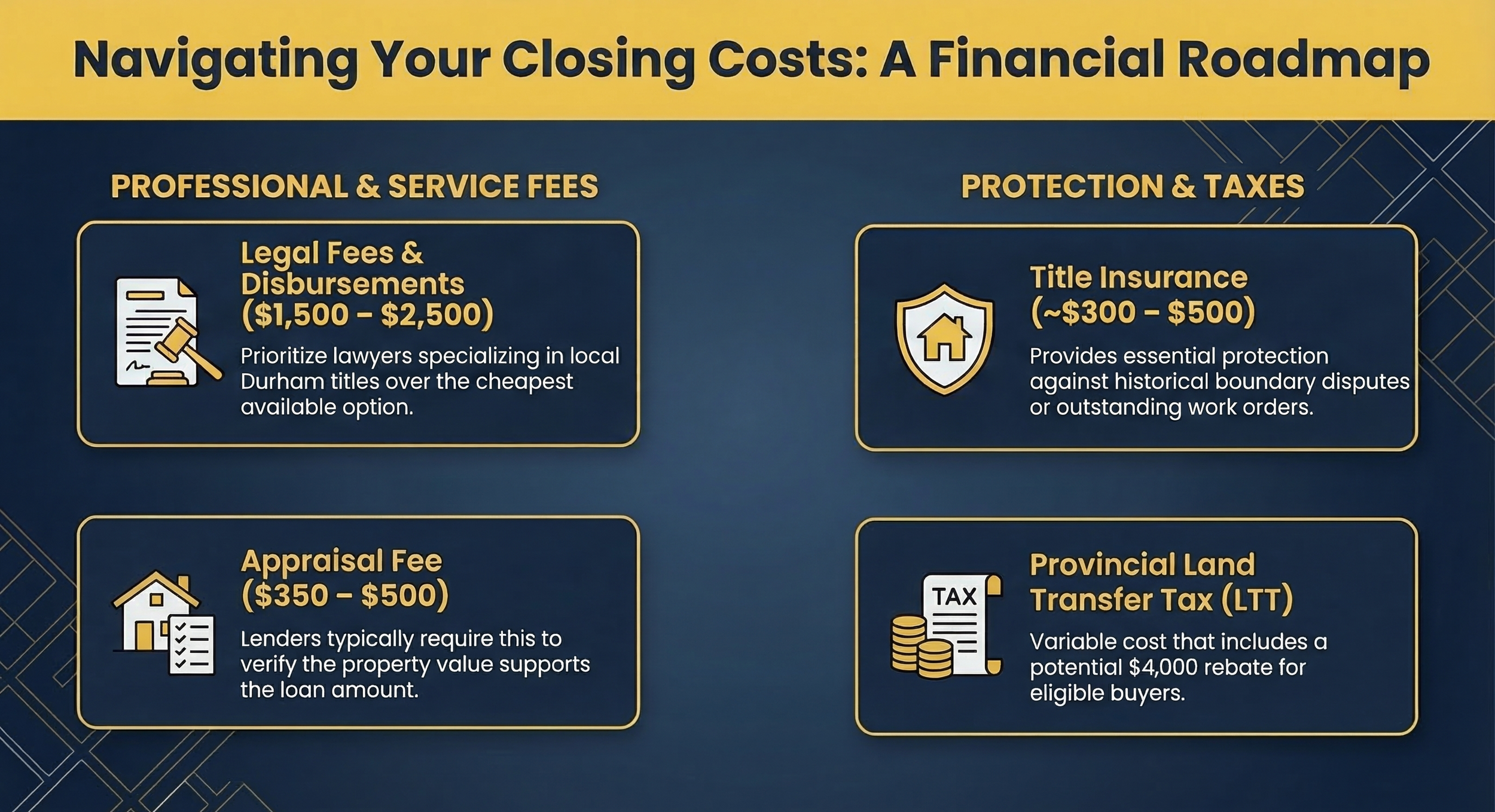
Most buyers fixate on the sticker price, which currently hovers between $948,000 and $972,000. But the "real" cost of a home in Whitby involves understanding the friction points of Ontario real estate law and local tax structures.
The Land Transfer Tax (LTT) Edge
One of the biggest advantages of buying in Whitby versus Toronto is the tax structure. In Toronto, you pay both a provincial and a municipal tax. In Whitby, you only pay the Provincial Land Transfer Tax. For a first-time buyer, the $4,000 rebate is a significant "welcome gift" from the province, but you must ensure your lawyer applies for it at the time of closing to keep that cash in your pocket for immediate renovations.
The "New Build" Tax Trap
If you are looking at the newer developments in North Whitby or Brooklin, you need to be wary of the supplementary tax bill. Many first-time buyers see a low property tax on the listing and assume it stays that way.
The Reality: The city may have only assessed the land, not the finished structure.
The Risk: You could receive a "catch-up" bill two years later for thousands of dollars. We always advise our clients to set aside a "Tax Buffer Fund" of at least 1.2% of the purchase price to cover this eventuality.
2. Navigating the Neighbourhood Matrix
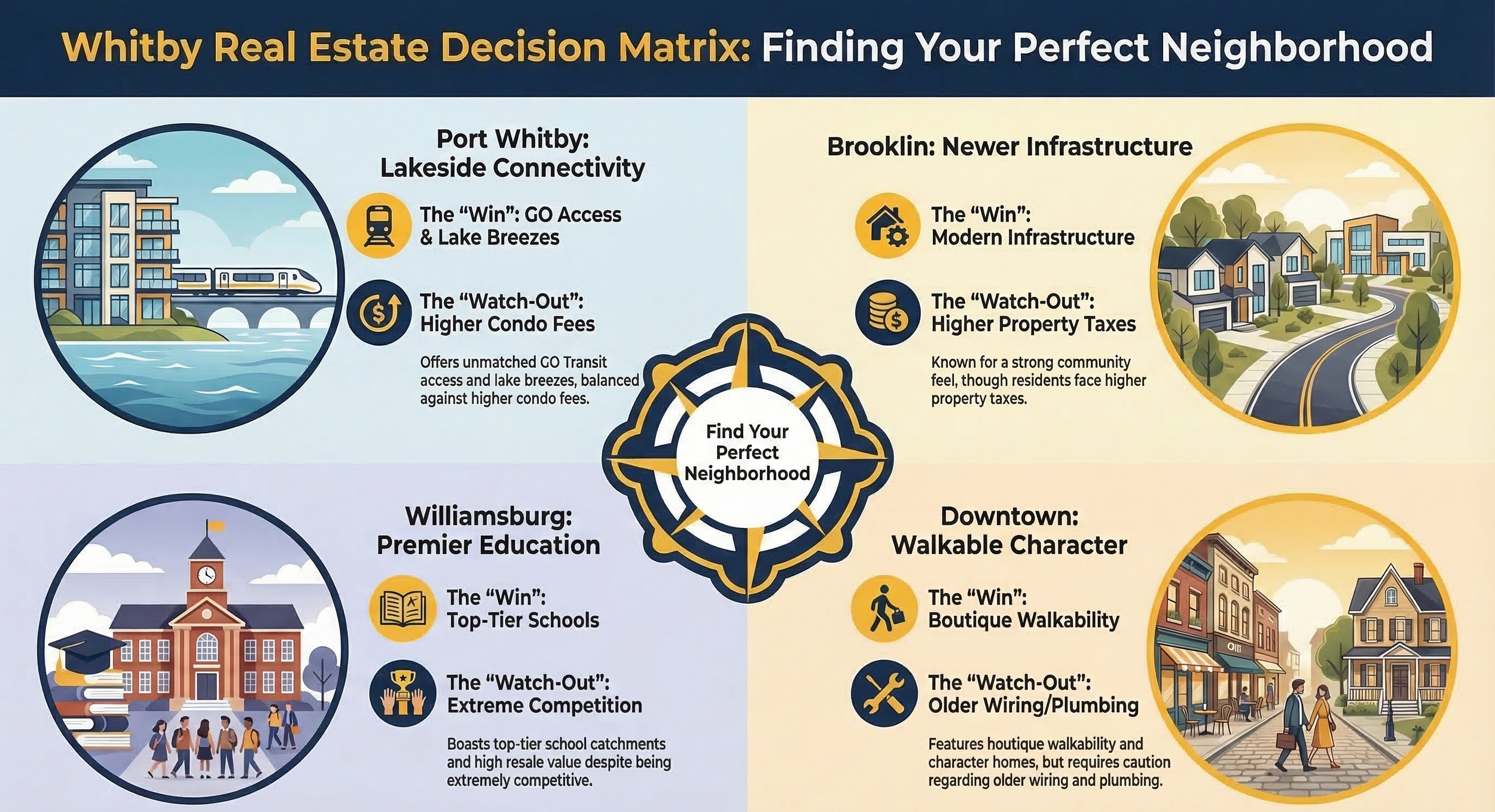
Whitby is a patchwork of micro-markets. Choosing the right one depends on whether you value appreciation, lifestyle, or transit efficiency.
Port Whitby & Whitby Shores: The Transit Play
If you’re commuting to Union Station, this is your home base. But don't just look at the proximity to the GO; look at the master plan for the waterfront. Properties here maintain value because land is limited by the lake—you can't build more "south."
Williamsburg & Pringle Creek: The "Middle Market"
Williamsburg is the gold standard for schools (like Jack Miner P.S.), which acts as an insurance policy for your resale value. Pringle Creek offers larger, more mature lots. If you’re willing to do some "sweat equity" (cosmetic renovations), Pringle Creek is where you find the best price-per-square-foot.
Brooklin: The Village Premium
Brooklin offers a distinct identity. It feels like a separate town. With the 407 extension, it’s no longer "isolated," but you pay a premium for that "small-town" aesthetic and the newer builds.
3. The David Beaton "Beyond the Inspection" Protocol
A standard home inspection is the bare minimum. When we represent a buyer, we look for the things that a $500 inspection report might miss but a $10,000 repair bill won't.
The "Big Three" Durham Issues
Kitec Plumbing: Common in some Whitby condos and townhomes built between 1995 and 2007. It's a ticking time bomb for leaks and can make a home uninsurable.
Basement Grading: Whitby’s clay-heavy soil means water management is everything. We look at the slope of the yard—if it’s tilting toward the foundation, that "finished basement" is a liability.
Attic Insulation & Mold: Many older homes in Pringle Creek or Downtown have original insulation that doesn't meet modern R-values, leading to ice damming in our tough Ontario winters.
The 412/407 Factor
With the removal of tolls on the 412 and 418, traffic patterns in Whitby shifted significantly. A house that was "quiet" five years ago might now be on a major bypass route. We analyze the regional traffic flow to ensure your quiet backyard stays quiet for the next decade.
4. Maximizing the First-Time Buyer Advantage
Beyond the CMHC guides and "Dummies" books, there are high-level maneuvers that can save you five figures.
The RRSP Home Buyers' Plan (HBP): You can withdraw up to $60,000 (as of recent federal budget updates) from your RRSPs tax-free to use as a down payment. If you're buying as a couple, that’s $120,000.
Energy Audit Rebates: Before you renovate, get an energy audit. The federal and provincial governments often offer "Greener Homes" grants that can reimburse you for heat pumps or window upgrades.
The "Unlisted" Market: At David Beaton Real Estate, we often have access to "pocket listings"—homes where the seller wants privacy and hasn't hit the MLS yet. This is the ultimate "cheat code" for first-time buyers to avoid a bidding war.
At David Beaton Real Estate, winning in a competitive market, we provide the strategy, the local knowledge and the aggressive negotiation you need.